The future of the DOE Site
Edited and introduced by Anna Keller from news reports
9 February 2026
An enormous project to restart uranium enrichment in Paducah, Kentucky on a Department of Energy site is working its way through approvals and public comments. If built, one of the enrichment facilities will be owned by Peter Thiel's General Matter. Officials plan to announce an expedited secure AI data center associated with the federal government sharing the high-security site. If built, it will be America's only uranium enrichment site and Kentucky's second hyperscale data center.
Background
The US buys nuclear fuel from Russia for power plants and submarines. There's a single uranium mine in the US, on the edge of the Grand Canyon in Arizona, closed during Biden's administration due to a dispute with the Navajo nation but reopened by Trump's Secretary of the Interior. There's one firm, a small family company from Utah, transporting uranium ore in trucks on fixed routes at fixed times to northern Illinois. Ore is milled by the Honeywell Uranium Hexafluoride Processing Facility. The plan is to ship milled uranium hexafluoride by train to Paducah for enrichment.
Federal officials' pursuit of reshored uranium supply chains has three ends: escalating the new cold war with Russia by creating more separation between the two countries, powering AI data centers, and building new nuclear weapons, now that it has allowed to expire all arms-control treaties to which the US was party.
It's no secret there is a huge scramble to build "hyperscale" data centers to store massive libraries of video and inference from a hundred thousand newly- deployed AI-enabled surveillance cameras, surveillance data captured from hundreds of millions of phones and tens of thousands of new cars, as well as commercial and government datasets and AI analytic, media production, and decision-making models and processing.
Boondoggle
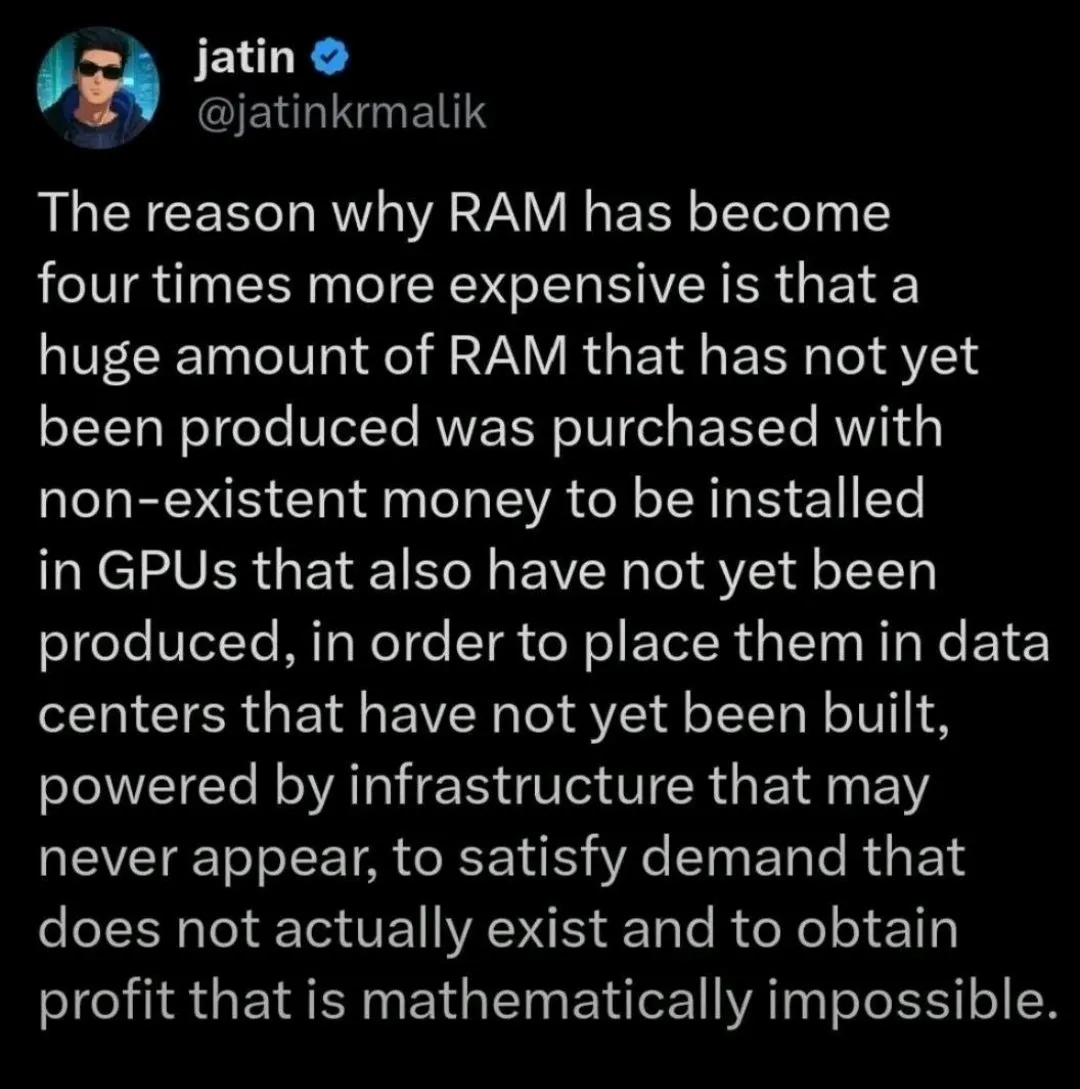
The number of data centers under contract to be built will exceed the US electrical grid's transmission capacity, and exceed the power that could be generated from all the coal, natural gas, wind, solar, and nuclear power available. American AI models are wasteful of energy, but the biggest use of energy is due to the massive refrigeration systems to transfer their hyperscale waste heat outside. AI data centers are refrigerators the size of small cities full of millions of space heaters in racks.
Much is made of AI's supposed commercial applications, but no AI company has made a profit. In fact, they bleed billions of dollars, and only stay afloat through circular financing schemes and hype which make it appear they have more cash available than they do. The resulting overvaluing of AI stocks has been responsible for nearly all the growth in the US economy in the last year. Nonetheless, commercial AI has no path to profit except as a contractor for the US military and ICE's federal secret police. These are the only customers that can ultimately afford to pay the basic costs of hyperscale AI, and the only customers for what it does.
The proposed data center buildout isn't possible without nearly doubling power generated in the US (from 17 to 33 GW) and monopolizing the new power, preventing it from being used for any public good. Because data centers are central to total surveillance, AI analytics, and AI kill chains, data centers must be able to operate when the rest of the grid goes down in heatwaves, storms, wildfires, and floods. The proposed way is with "small modular nuclear reactors," a theorized way to generate power based on expensive reactors in nuclear submarines.
No small modular nuclear reactors exist. If their cost is on the scale of nuclear submarine powertrains, the power they generate will cost ten or a hundred times what grid power costs. The only customer that can afford power at that cost is the US military.
Why are we building such a big data center?
The first real-world test of modern military AI is the Gaza genocide. Israel has a hardened data center buried 9 stories deep, the model for the buried data center under contract to be built on the grounds of the White House in Washington, DC. But most of Israel's data on all living Gazans and their associates is stored on Microsoft Azure servers, like our government's data (which is also stored in Amazon Web Services).
The first domestic test of modern military AI is ICE's surges, particularly in Minneapolis. The Department of Homeland Security uses commercial analytics tools to correlate datasets to identify individuals to grab, then uses employment, Medicaid, and school data correlated with real-time data from targeted individuals' phones, cars, and surveillance cameras connected to facial recognition software to locate and abduct them. As well as being political weapons and honest attempts to decrease the illegal immigrant population in the US, these surges are pilot projects to test and improve the US's Israel- like military AI.
To scale up the capability of military AI from targeting a city's populaton to a state or region's, Silicon Valley AI grifters convinced our president and many corrupt legislators of the need to give almost unlimited financing, tax breaks, and regulatory exemptions to their firms to build nuclear-powered hyperscale military data centers.
In the rest of this article, I examine the players involved in trying to bring hyperscale AI data centers and nuclear enrichment to Kentucky, as well as dates and possible levers to encourage spending and infrastructure more in the public interest.
US Rep. Andy Barr (R KY-6)
Rep. Andy Barr is running for US Senate, with a large war chest contributed mostly by Israel and unusually unscrupulous financial firms. He's campaigning hard in Paducah, the site of proposed nuclear enrichment. His talk to the Paducah Area Chamber of Commerce last week sounds like a press release delivered on behalf of his employers.
"West Kentucky's an energy juggernaut both in terms of what we see at the Paducah Gaseous Diffusion Plant [Department of Energy] Site, designated for AI infrastructure going forward because we need nuclear power to win the race for AI. I was very glad to be able to advocate for Paducah with Secretary Chris Wright. Had a great conversation with him before the announcement of the $900 million grant to General Matter for the enrichment.
"The future of building an American nuclear energy- dominant industry is nuclear fuel. The barrier to really building up a nuclear power industry of consequence in this country is the deficiency, the lack of nuclear fuel. Paducah is the solution.
"My vision as the next United States senator from Kentucky is to take our energy dominance, nuclear and coal in western Kentucky, and position the entire Commonwealth to power these technologies of the future. It's a national security imperative that we win the race for these technologies. China is racing ahead and we have to win. The consequences of losing that race for AI are unfathomable.
"Like any other new innovation, there's upsides and downsides, and there's risks, and there's opportunities. But AI is here to stay, and we need to be the global leader in it. So when you think of regulation, we don't need a patchwork of conflicting and inconsistent rules, state by state. You have some of these blue states that are anti-innovation, and they've enacted very draconian regulatory regimes that will stifle American leadership and artificial intelligence, which has tremendous potential to drive productivity, economic growth and innovation in medicine, in law, in education." (Paducah Sun, Feb 4)
US Sen. Rand Paul (R-KY)
Shortly before Barr's latest stop in Paducah, Sen. Rand Paul announced in a January 22 press conference he was "getting rid of" nuclear regulations at the federal level and expected the state legislature to do the same.
Kentucky Republicans at the state level are focused on AI policy. A task force on the topic has met over the past two years to work on potential legislation. Instead of regulating the industry, Paul suggested state legislatures should focus on easing site selection.
"A lot of these decisions will be made by the state legislature," Paul said. "I think if you're in a crowded area, a suburb of a big town, you say, 'I may not want a whole power grid and a data center here," Paul said. "If you live in a rural community that really is hungry for jobs and needs population, you might want one."
"You can't just have data centers without energy, so we're going to need more energy." Paul said he had been working with his staff to "get rid of regulations that are inhibiting nuclear power" at the federal level. (KY Lantern, Jan 22)
US Secretary of the Interior Doug Burgum
Doug Burgum, billionaire and former North Dakota governor, represents the fossil fuel and nuclear industries as Secretary of the Interior. At his nomination hearing last year, he used the same talking points Barr used in Paducah about the military need for new electricity generation.
"Without baseload, we're going to lose the AI arms race to China, and if we lose the AI arms race to China, then that's got direct impacts on our national security." (Financial Times, Jan 16, 2025)
In comments to a House committee in May during debates over the Big Beautiful Bill, Burgum discussed firing thousands of Department of Interior staff and opening public lands to more mining and drilling. He compared the importance of AI data centers to the importance of climate change.
"The existential threats that this administration is focusing on are: Iran cannot get a nuclear weapon, and we can't lose the AI arms race to China. That's the number one and number two. If we solve those two things, then we will have plenty of time to solve any issues related to potential temperature change." (Mother Jones, May 22, 2025)
Speaking to reporters in Italy at Gastech, a major natural gas industry conference, Burgum repeated what he told the House committee.
"What's going to save the planet is winning the AI arms race. We need power to do that, and we need it right now." (Politico Pro, Sep 11, 2025)
US Department of Energy (call for public comments)
A "categorical exclusion" for advanced nuclear reactors established by the U.S. Department of Energy could speed the development of nuclear reactors in McCracken County, Judge Executive Craig Clymer said in a statement Friday (Feb 6).
"The U.S. [Department of Energy] has established a 'categorical exclusion' under the National Environmental Policy Act (NEPA) related to advanced nuclear reactors," Clymer's statement read. "This means that certain reactor projects may bypass lengthy environmental assessments or impact statements if DOE determines they have proven to pose very low risk and can manage waste safely and appropriately." The exclusion applies to the authorization, siting, construction, operation, reauthorization and decommissioning of advanced nuclear reactors.
Clymer said he anticipates one or more nuclear reactors being built in McCracken County in the next four to five years. He encouraged community members who wish to share their perspective to participate in the DOE's call for public comments open through March 4. Comments can be submitted at https://tinyurl.com/4hjvxpdd.
Clymer added commenters should not include personal information in their responses, as comments will be publicly accessible and published unchanged. (Paducah Sun, Feb 7)
Kentucky Public Service Commission chair Angie Hatton (public meetings)
The Kentucky Public Service Commission will hold a series of public information meetings across the state to gather public input on nuclear power generation and related issues as part of a statewide regulatory review. The meetings are being held in connection with Case No. 2025-00186, according to a news release from the PSC. The meetings are intended to collect input from citizens, businesses, academic institutions and local officials on nuclear generation and storage.
Public information meetings will be held on the following dates and locations:
- Feb. 26 at 5 p.m. EST- Morehead State University, Ronald G. Eaglin Space Science Center, 235 Martindale Drive, Morehead.
- March 17 at 5 p.m. EST- University of Louisville, J.B. Speed School of Engineering's Student Success & Research Building, 201 Engineering Drive, Louisville.
- March 25 at 5 p.m. EST- Bluegrass Community and Technical College, Newtown Campus, 500 Newtown Pike, Lexington.
- April 1 at 5 p.m. CST- Western Kentucky Community and Technical College, Emerging Technology Center, 5100 Alben Barkley Drive, Paducah.
- April 6 at 5 p.m. EST- Northern Kentucky University, University Center, Budig Theatre, 1 Nunn Drive, Highland Heights.
- April 8 at 5:30 p.m. CST- Western Kentucky University, Amy and David Chandler Hall, Houchens Industries Auditorium, 410 Regents Ave., Bowling Green.
"As our nation struggles to keep up with rising demand for electricity, nuclear energy is increasingly seen as a reliable, dispatchable, clean energy source, and as such, is experiencing a resurgence in the United States," PSC Chair Angie Hatton said in the release. "Recent technological advances have made nuclear energy potentially more affordable and attainable. However, the technology is still very expensive, and we want to make sure we examine all angles of this potential power source."
[There have not, in fact, been "recent technological advances in nuclear power generation." It's industry-speak promising that, given sufficient money, there will be advances, meaning small modular nuclear reactors. It's the equivalent to Elon Musk announcing Tesla is weeks away from full self-driving mode, or Sam Altman saying OpenAI has solved artificial general intelligence.]
The meetings are part of the PSC's compliance with 2024 Senate Joint Resolution 140, which directed the commission to make staffing, organizational and administrative preparations related to applications for nuclear energy facilities, according to the release. Additional information and case documents are available on the PSC website at psc.ky.gov under Case No. 2025-00186. (Paducah Sun, Jan 31).
Local government in Paducah
Data centers employ people while they're under construction, but neither data centers nor modern automated uranium enrichment need more than a couple dozen workers to operate, mostly security guards. They get enough tax breaks they won't contribute to the tax base. They won't be compelled to clean up their spills or brownfields they will leave behind. They will primarily "enrich" Silicon Valley grifters, energy industry executives, and politicians on their payroll.
McCracken County Judge Executive Craig Clymer and Paducah Mayor George Bray shared updates on the AI data center expected to be built at the Department of Energy Paducah site during their State of the County and State of the City addresses at the Paducah Area Chamber of Commerce's January Power in Partnership breakfast.
In July 2025, the US Department of Energy announced the Paducah Site was one of four being considered to house AI data centers and energy generation projects. In November, the DOE issued a request seeking proposals from companies to build and power data centers at the site.
During his speech, Clymer said the DOE now expects to break ground on a data center at the site in June. Clymer said that information came from DOE Assistant Secretary for the Office of Environmental Management Tim Walsh when Walsh visited the county a couple weeks ago. To build at the DOE site, Clymer said AI companies will have to supply their own electricity --likely via gas turbines and later through multiple [currently theoretical] small-scale nuclear reactors.
According to Clymer, the cost of the data center will be between $250 million and $1 billion, depending on its size. The [theoretical] small-scale nuclear reactors expected to eventually power it may cost $1 billion to $3 billion.
The data center proposal is one of several projects now planned for the site, including two involving uranium enrichment companies Global Laser Enrichment and General Matter and one involving the potential commercial extraction of contaminated nickel stored at the site.
To find the workers needed for the project, Clymer said the county is working to partner with the military to provide jobs for veterans transitioning to the private sector after their service. Because of the economic growth expected in Paducah and McCracken County, Bray said the city is working to expand housing options. "We have big plans for housing," he said. (Paducah Sun, Jan 9)
KY's first hyperscale data center, Jefferson County
Virginia-based PowerHouse Data Centers, a subsidiary of American Real Estate Partners, and Poe Companies of Louisville are building Kentucky's first hyperscale data center campus in Louisville. It will use about 400 megawatts of electricity with 130 megawatts of electricity expected to be used in 2026 when the center becomes operational. The $11 billion center is under construction on Camp Ground Road just west of Shively in southwest Jefferson County.
The Kentucky legislature passed a law last year providing tax breaks for data centers seeking to locate in Jefferson County, something Kentucky Senate President Robert Stivers, R-Manchester, on Thursday hailed as "groundbreaking legislation that will spark job creation and expand the tax base." The Republican said he worked closely with Kentucky Cabinet for Economic Development Secretary Jeff Noel and the private sector on the legislation.
Louisville Mayor Craig Greenberg, a Democrat, in a statement said the project would create "thousands of good-paying jobs" in Kentucky's largest city.
These operations also use a tremendous amount of electricity and significant amounts of water to cool the computers. The eventual electricity demand for the new data center campus is nearly equivalent to the entire capacity of Louisville Gas and Electric and Kentucky Utilities' (LG&E and KU) coal-fired unit at its E.W. Brown Generating Station in Mercer County.
The release from the developers states "power supply will be supported by a new switch station to be built by LG&E and completed in September 2026, along with a dedicated on-site substation." Chris Whelan, a LG&E and KU spokesperson, in an email said projects needed to serve the electricity load of the data center included building a substation (KY Lantern, Jan 16 2025 and Jan 14).
Regulation for data center in Oldham County
Rob Houchens, with We Are Oldham County, helped organize a successful fight to block a 1.7 million square foot center proposed last year in his county. The proposal developers eventually dropped was too near residential areas and not far enough off the main highway. Also, Oldham County lacked adequate regulations for such developments, which officials now are close to adopting, he said (KY Lantern, Jan 14).
Rob Houchens is running for Judge Executive of Oldham County in 2026 (We Are Oldham County facebook page, Feb 20).
"It's not legal for us to say we can't have data centers in Oldham County at all. That would be easily challenged in court. We can, however, provide restrictive language in our zoning code and regulation to ensure if we do get a data center, it would be in keeping with what we want Oldham County to look like," said Nathan Oberg (We Are Oldham County youtube channel, Aug 27, 2025).
Oldham County, KY officials voted unanimously to begin drafting a 150-day moratorium on new data center projects. The pause would allow time to update local regulations. However, it won't affect the controversial $6 billion "Project Lincoln," as its application was already submitted.
Project Lincoln officially OC Data Center, is a hyperscale data center initiative by Western Hospitality Partners, but details regarding specific hyperscaler involvement have not been disclosed publicly.
During the April 15 fiscal court meeting, residents voiced opposition, citing concerns about noise, environmental impact, and industrial development on agricultural land. Much of the organizing has coalesced around We Are Oldham County, a community-run Facebook group led by local resident Nathan Oberg (datacenterwatch.org, Apr 17 2025).
Madison County opposes data centers
Madison County officials expressed opposition to allowing a data center to locate in Madison County, adding there are no such plans proposed. At Tuesday's Fiscal Court meeting, resident Mary McMahan asked officials whether there is a plan in place to address an application to build such a facility. Magistrate Stephen Lochmueller acknowledged rumors about a center being proposed. He said they are not true.
Kentucky's relatively low electric and water rates, low land prices, and weak zoning laws [may] make the Commonwealth attractive to developers who seek to build data centers. Madison County Judge Executive Reagan Taylor expressed doubt that a data center would be feasible, even if it was wanted.
"There's just not land available for that kind of use. It would require a zone change. It would require immense infrastructure, water, sewer, roads, and there's not many places in the county that are suited for that."
Taylor added data centers don't produce many jobs and would be a drain on local resources. Because it is the county's objective to grow the number of jobs, and thus help grow needed revenue for the future, Taylor said a data center would not be a good economic development strategy. Taylor said it will probably be necessary to make a definitive policy statement, whether in the upcoming comprehensive plan process or in future legislation.
Citizen opposition to data centers has popped up most recently in Mercer County, while the Mead County Fiscal Court blocked changes requested by a prospective data center developer, according to a report by the Lexington Herald-Leader. Oldham and Simpson counties, meanwhile, have paused plans for data centers after objections were raised by local residents.
Lochmueller thanked McMahan for directing questions personally to officials.
"This is refreshing to have somebody actually come to court and ask questions. That's what we want," Lochmueller said. "I find it refreshing that somebody comes to court to ask questions instead of typing on the keyboard" (Berea Citizen, Feb 25).
State Rep. Josh Bray HB 593
"The big data center bill is Rep. Josh Bray’s House Bill 593, which was supposed to get a committee vote last week but got pulled so it can be worked on some more" (The Gallery Pass, Feb 23).
Summary of original version:
Create new sections of KRS Chapter 96 relating to municipal utilities and KRS Chapter 278 relating to Public Service Commission-regulated utilities to:
- define terms;
- only allow for the provision of electric service to a data center through a contract that conforms to the requirements of the Act;
- require that within 90 days of the effective date of the Act, the electric service provider issue or file a tariff setting forth the process for a data center customer to apply for service;
- require the payment of a nonrefundable service application fee;
- require the preparation of studies to determine the manner in which the electric service provider can safely and efficiently serve the data center in a way that does not have negative service or rate impacts to their non-data center customers;
- establish the minimum contract requirements between the electric service provider and the data center customer;
- provide that requirements of the Act that are conflict with the Tennessee Valley Authority's requirements for the distribution of electricity that it supplies shall not apply;
- prohibit the charging or allocating of any costs associated with serving or constructing new infrastructure to serve a data center to any other customers served by natural gas, water, or wastewater utilities;
- amend KRS 154.20-229 to require that a qualified data center project that has been preliminarily approved for a certificate of exemption under KRS 139.499 include in its memorandum of agreement with the Kentucky Economic Development Finance Authority a certification that the data center project complies or will comply with all applicable local requirements and the applicable requirements of the Act. (apps.legislature.ky.gov/record/26rs/hb593.html).
Sum up
The plan for the Paducah Department of Energy Site is to restart uranium refining with military contractor labor to enable expensive military power generation, in order to scale up military AI data centers, so the Federal government can be more accurate in who they abduct and detain domestically, develop capability to directly carry out the next Gaza genocide abroad, and make the heads of a handful of firms and elected officials who work for them even more rich.
There are other capabilities needed to achieve their dystopian vision, like much more detention space, many more explosive munitions (Ukraine and Israel have consumed an unsustainable proportion of US stockpiles of missiles, bombs, and artillery shells), and better military drones for use domestically and abroad. There's also the issues of cost, unprecedented government debt, and increased taxation and austerity required.
Enrichment of uranium in Paducah, Kentucky is the linchpin, the central dogma, of the plan. For two years, the whole of government and the interested industries have been getting rid of nuclear and data center regulation, easing permitting, developing partial stories to engineer consent, but ground hasn't been broken. One mine, one trucking company, one mill, no enrichment plant yet, no small modular nuclear reactors yet.
For all the intimidating power of industries making this dystopian plan, it's still only a plan. They depend on a currently flimsy material reality, and can be stopped in Paducah. Public comments on DOE's proposed categorical exclusion of advanced nuclear reactors from NEPA regulation and the Kentucky PSC's public meetings about a proposed state nuclear regulatory framework are places to start.
Call, write, and lobby elected officials, develop your own argument against nuclear-powered military AI data centers and try it out with them. Develop your own argument for what should be done with the DOE Site and the billions flying around instead. Hold social, artistic, and educational events.
You can run against any politician who will be on the November ballot if it's clear he's listening to big money instead of his constituents. The filing deadline for Democrat and Republican primaries has passed, but you have until April 1 to file as an independent or Kentucky Party candidate, and until June 1 to turn in your petition signatures.
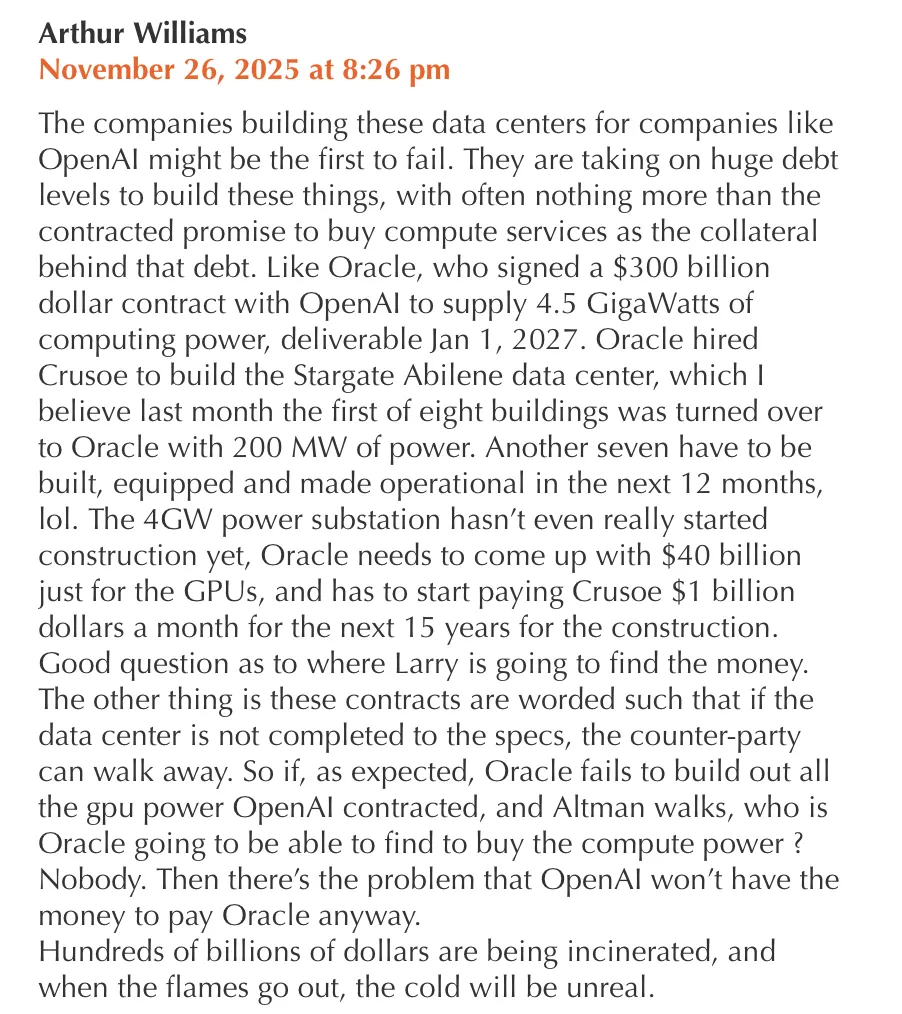
Anything built the next administration will inherit and use. If the project's held up til the bottom falls out of the commercial AI industry and a new administration representing other industries is elected, that's the first step to building something in the public interest of our citizens in Paducah and across the country.
This article, like all original content in The Kentuckian, is released into the public domain. The Kentuckian is an independent publication. It doesn't represent the opinion of the Kentucky Party or any of its committees.